
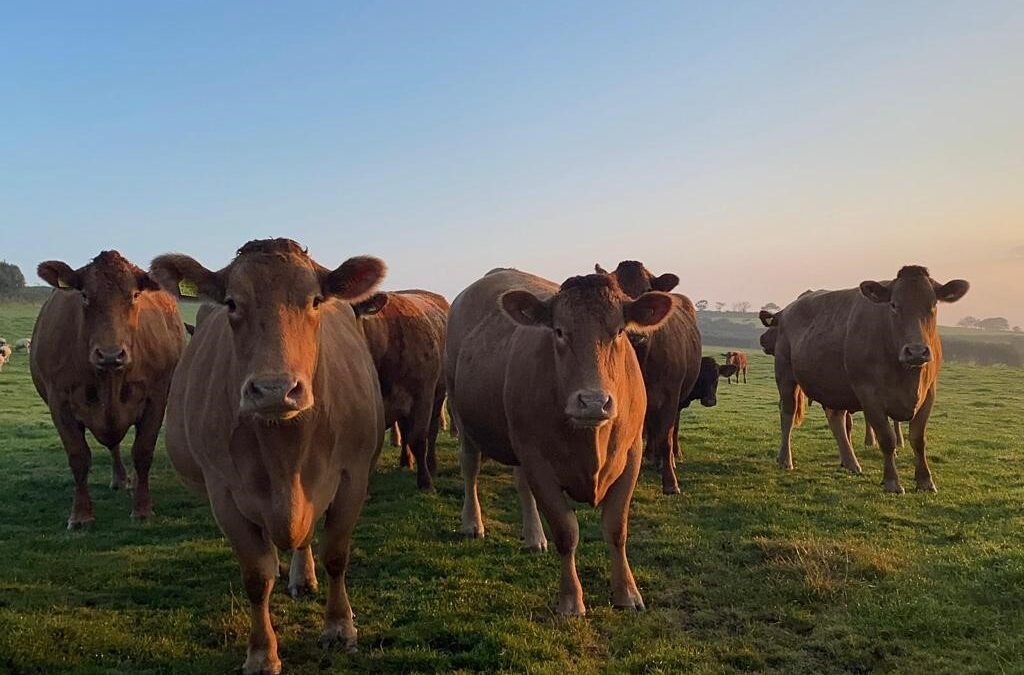
James Warwick has been working hard to bring down the age at first calving in his suckler herd and speed up bull finishing times.
Originally from Cambridgeshire, James relocated to Bude, North Cornwall, nine years ago to farm alongside his grandparents, John and Jan Throssell, who purchased Broompark Farm in 2001.
Recognising the progress he has made, James, 28, recently won the South West Beef Farmer of the Year award, with judges commending the genetic progress and efficiency improvements he has made since taking over the herd.
About the farm
James runs 30 pedigree South Devon suckler cows plus followers under the Broompark Prefix across 170 acres of grassland. He also keeps a flock of 350 breeding ewes which lamb outdoors for a month from 1st April. Mule ewes are crossed to Texels to produce
flock replacements, which are then mated to Hampshire Downs to produce finished lambs for Dunbia, South Petherwin/M&S.
Last year James doubled suckler numbers, purchasing 15 heifers at various South Devon breeding sales. By supplementing heifers from birth through to post-bulling and feeding top-quality forage, he has reduced age at first calving from three years to two.
This has paid dividends with every heifer put to the bull conceiving since James started bulling heifers younger four years ago.
Feeding for performance
James has been working closely with myself and Harpers Feeds for the past four years to analyse forage and tailor rations.
“We have always used Harpers ewe rolls but switched to their cattle feed in 2021 and saw better feed conversion and liveweight gains,” comments James.
He uses an easy-calving Red Devon on heifers to boost hybrid vigour – an idea inspired by a herd he judged six years ago. Cows continue to be bred to South Devon bulls, with the whole herd calving within a 12-week block from March.
Bull selection focuses on locomotion, functionality and docility – the latter is an important trait given James largely works alone.
Cows are forage-fed year-round, while calves receive creep feed (Harpers 18% Calf Rearing Molassed Mix) shortly after birth. They mob graze 4-5-acre fields with their dams and are shifted weekly. While at grass, calves are achieving impressive daily liveweight gains of 1.6kg, on average. Calves are typically weaned at housing in October at around 350kg
liveweight (50% of dam weight).
Post-weaning, bulls remain indoors on 3kg/head/day of 18% Calf Rearing Molassed Mix and quality first cut silage. First-cut is taken in May and normally averages 11ME and 13% protein. From 12 months of age, they transition to a 14% crude protein maize-based blend, Harpers Premier Beef Molassed Mix, which contains Levucell yeast to support
rumen function. The yeast helps manage the starch load and reduces the risk of acidosis.
On that ration, they are fed concentrate ad-lib and can consume up to 10kg freshweight each.
Finished bulls are sold to Kepak, Bodmin, killing out at 400-430kg deadweight, with the majority grading U or R with fat covers of 3=.
Future
Having retained heifers to grow herd numbers, James now plans to resume selling surplus breeding females.
“In the short-term, I want to improve the overall stamp and consistency of the herd and sell pedigree heifers.”
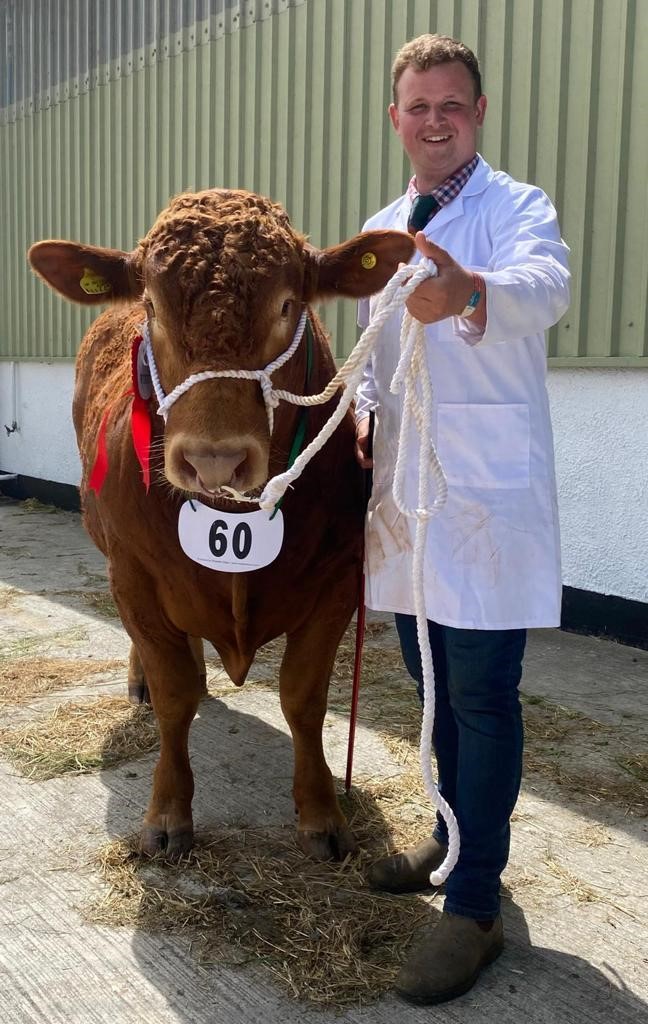
A major investment towards that goal was the purchase of the multi show champion Grove Sorrel 129 from the Grove dispersal for a breed record of 14,000gns. Sired by Trewint Maverick she is in calf to Woodhayes Homer 5.
The plan is to take embryos from her to fast-track her influence within the herd.
“I love my cows. I’m very fortunate my cows are my business, but also my hobby with my showing. I get a lot of enjoyment from them.”
Speak to your Harpers Feeds Specialist to find out more.
Matt Dymond
Ruminant Farm Consultant
07880 406 212


